An analogue photographic exploration of Berlin’s iconic Kino International, captured on 4×5-inch sheet film using a 100-year-old plate camera adapted for large-format photography. A visual study of architecture, light, and cinematic history.
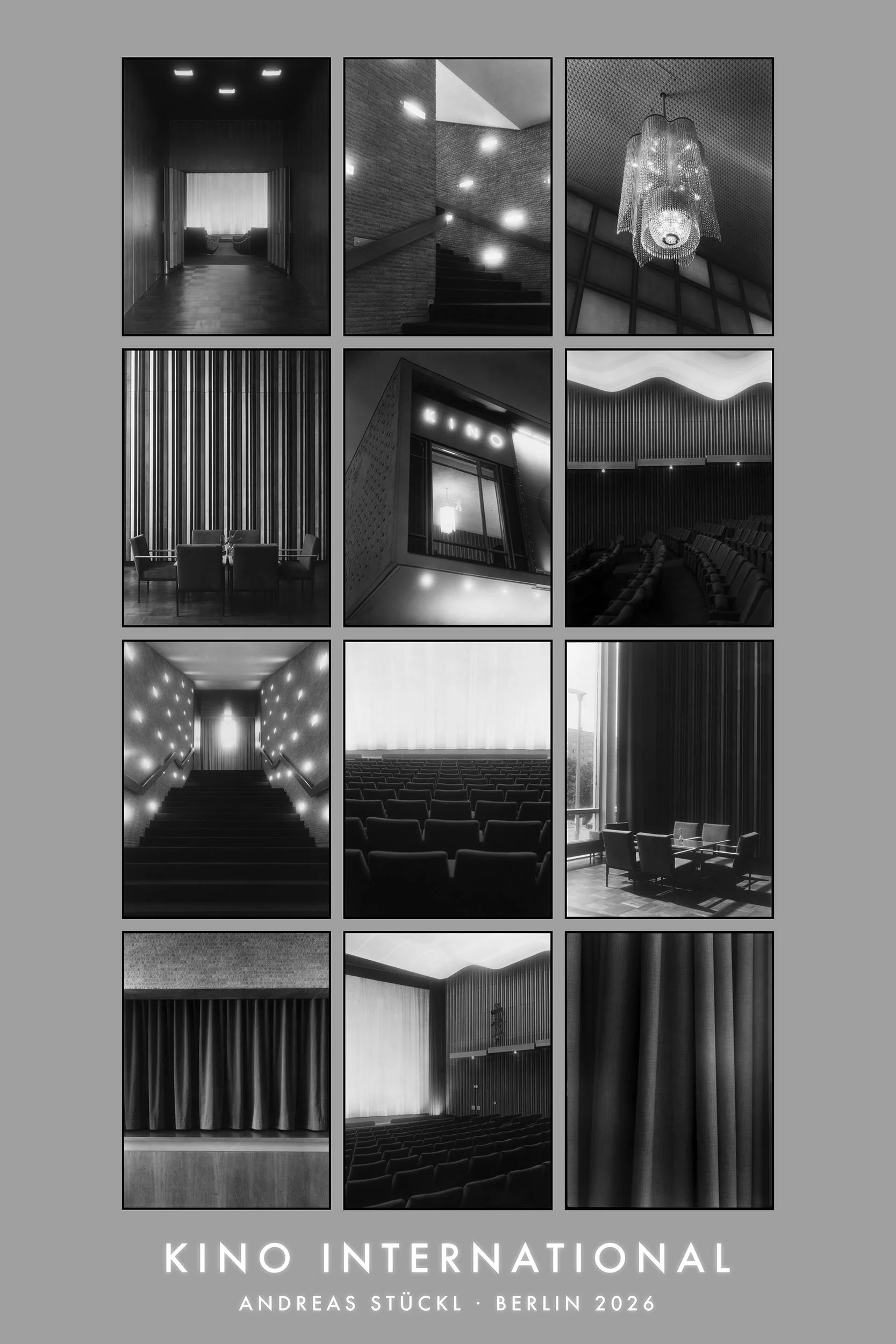
Opened in 1963, Kino International is one of Berlin’s most iconic examples of post-war modernist architecture. Designed by Josef Kaiser and Heinz Aust, the cinema on Karl-Marx-Allee served as East Germany’s prestigious premiere theatre and remains an important part of Berlin’s cultural and architectural heritage.
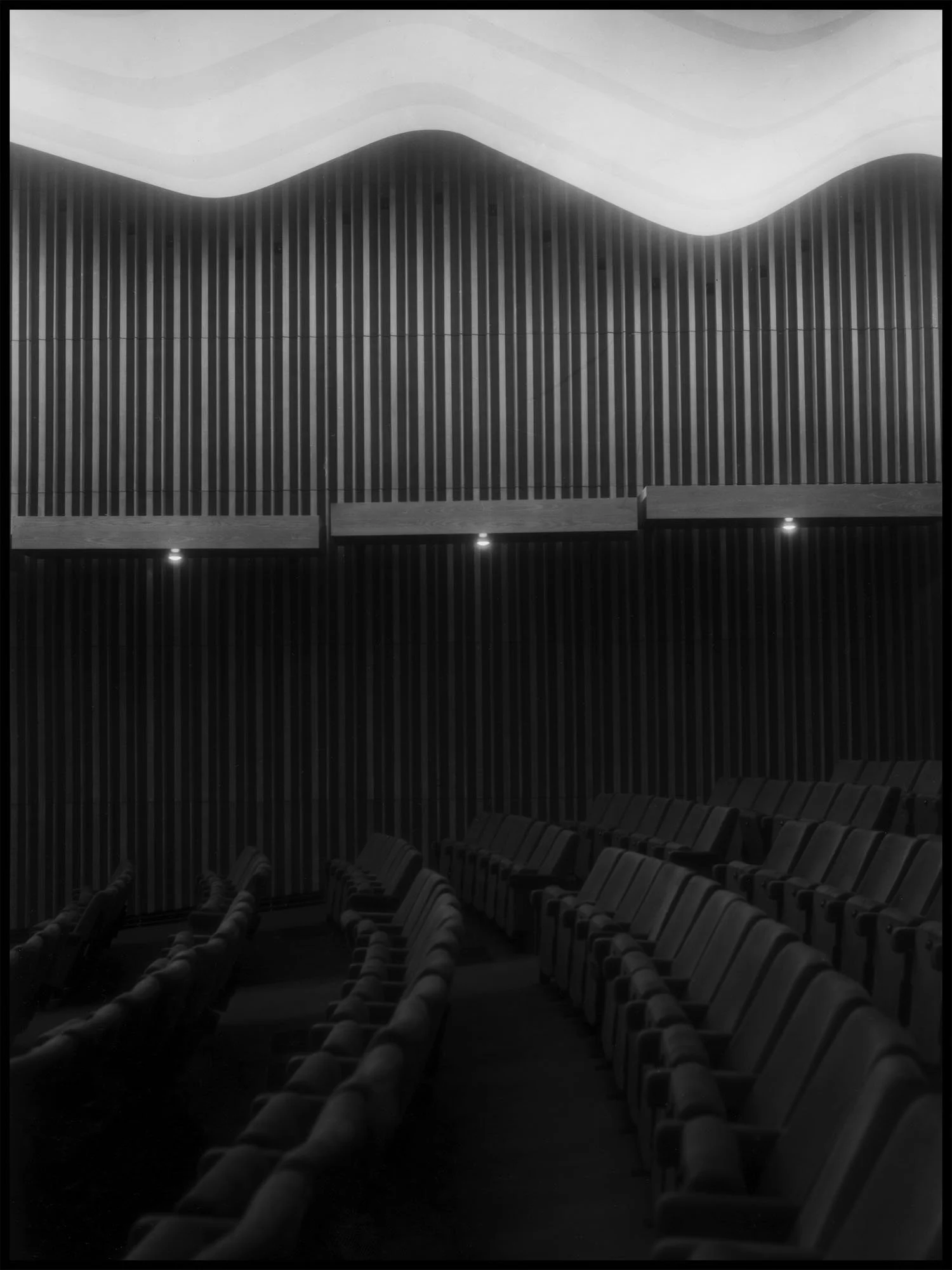
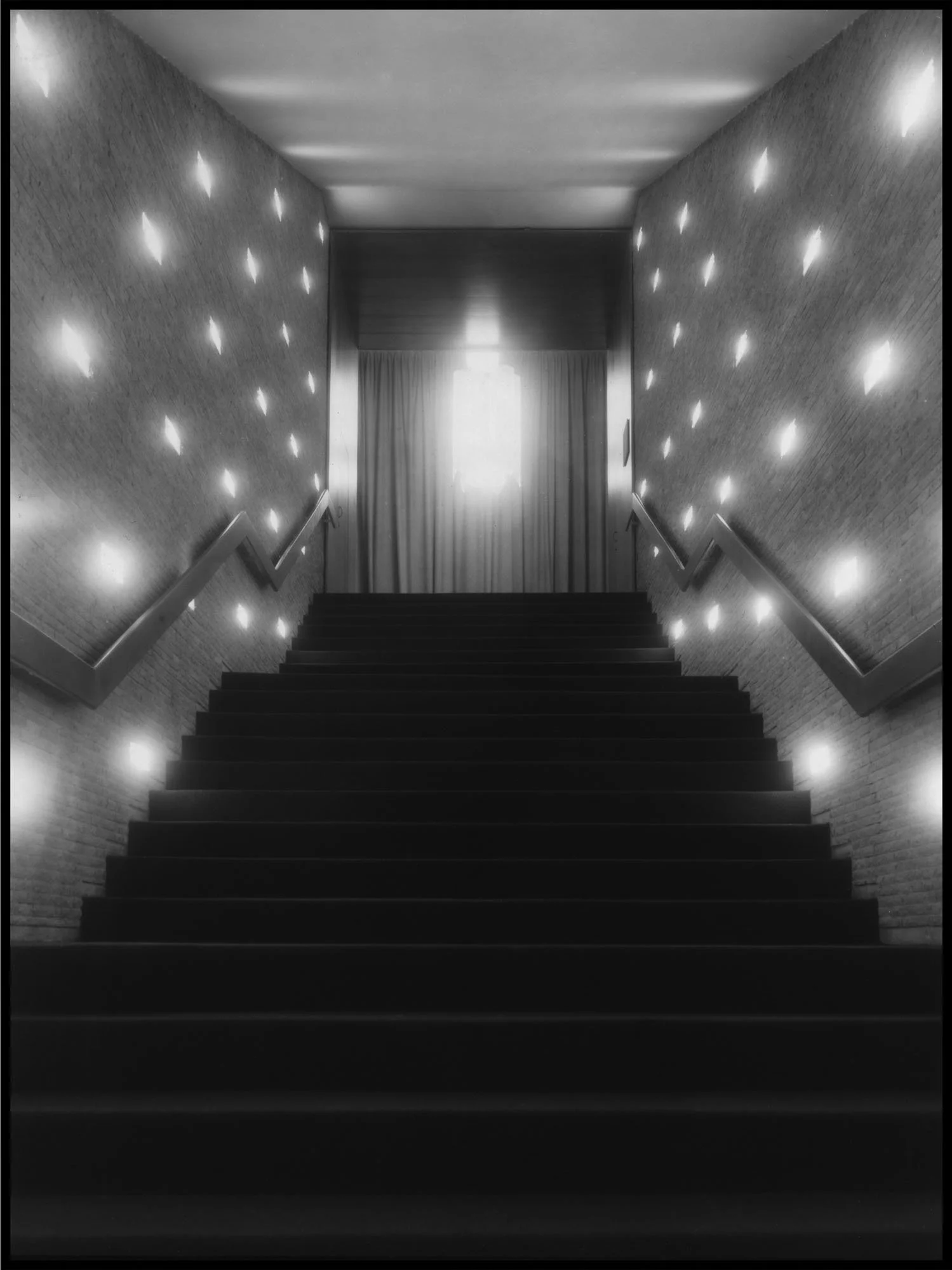
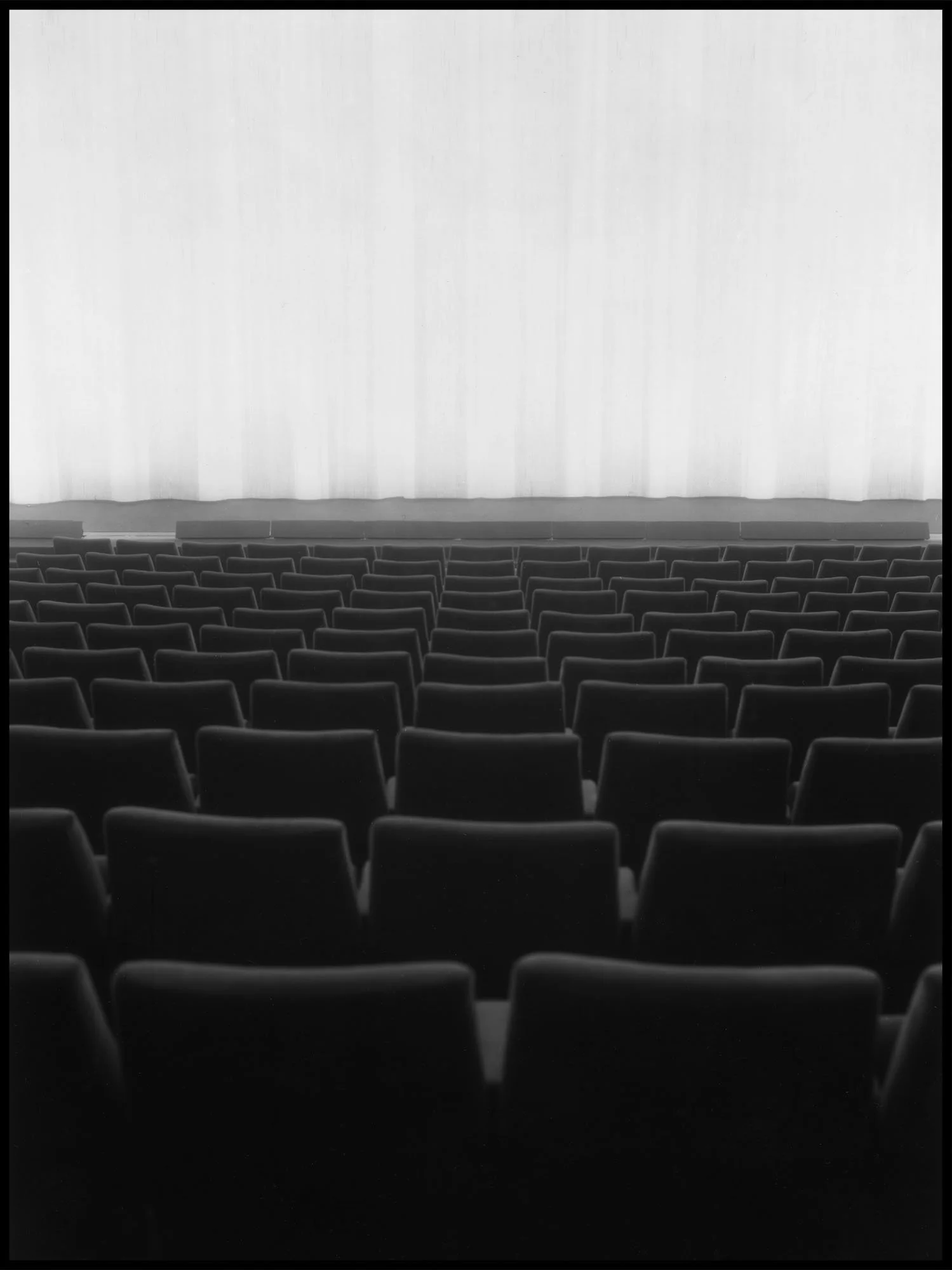
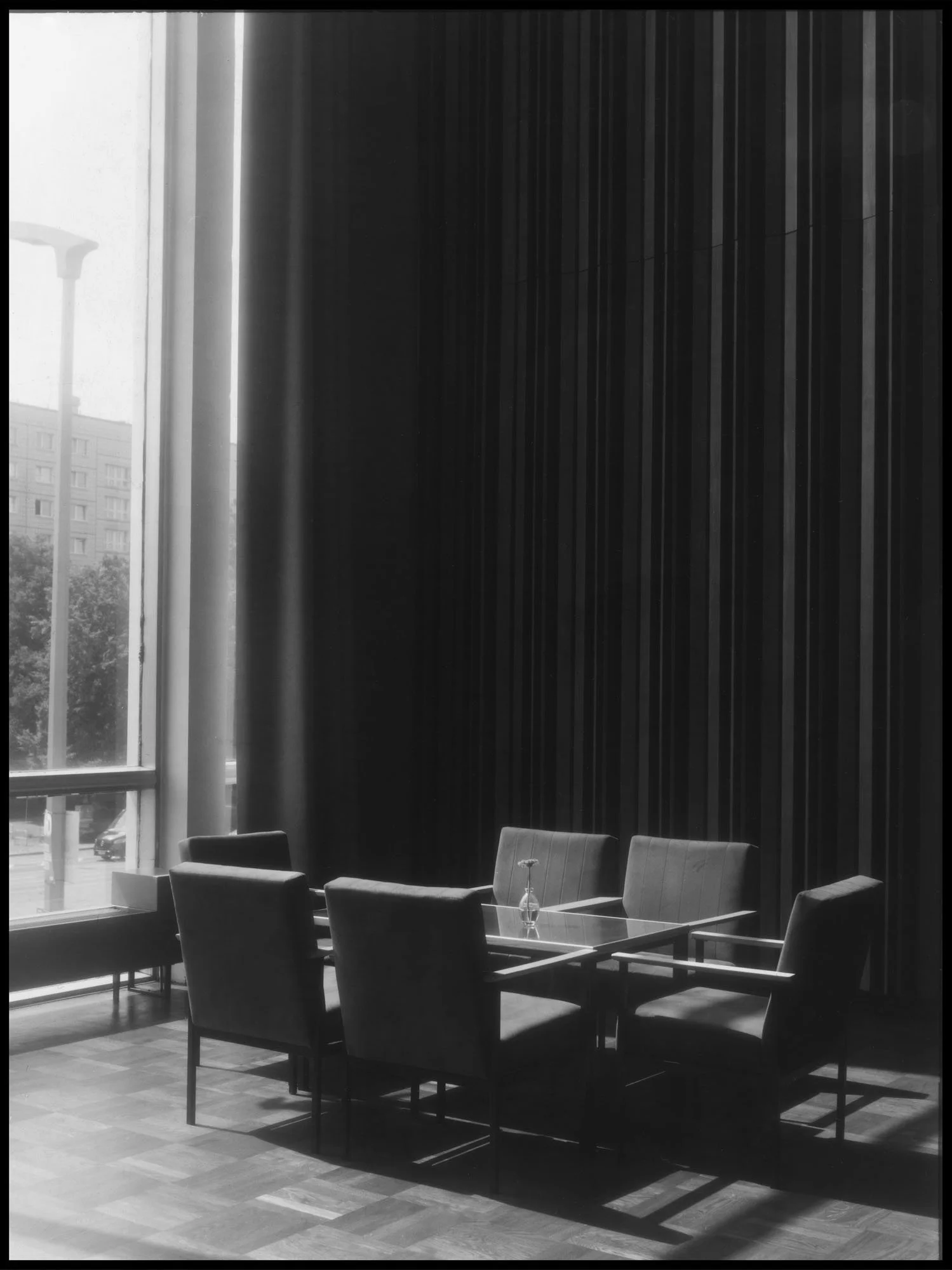
Following an extensive restoration, the historic cinema reopened in March 2026, carefully preserving its distinctive interiors, from the elegant foyer and panoramic bar to the auditorium and its shimmering silver curtain.
A Familiar Place, Seen Differently
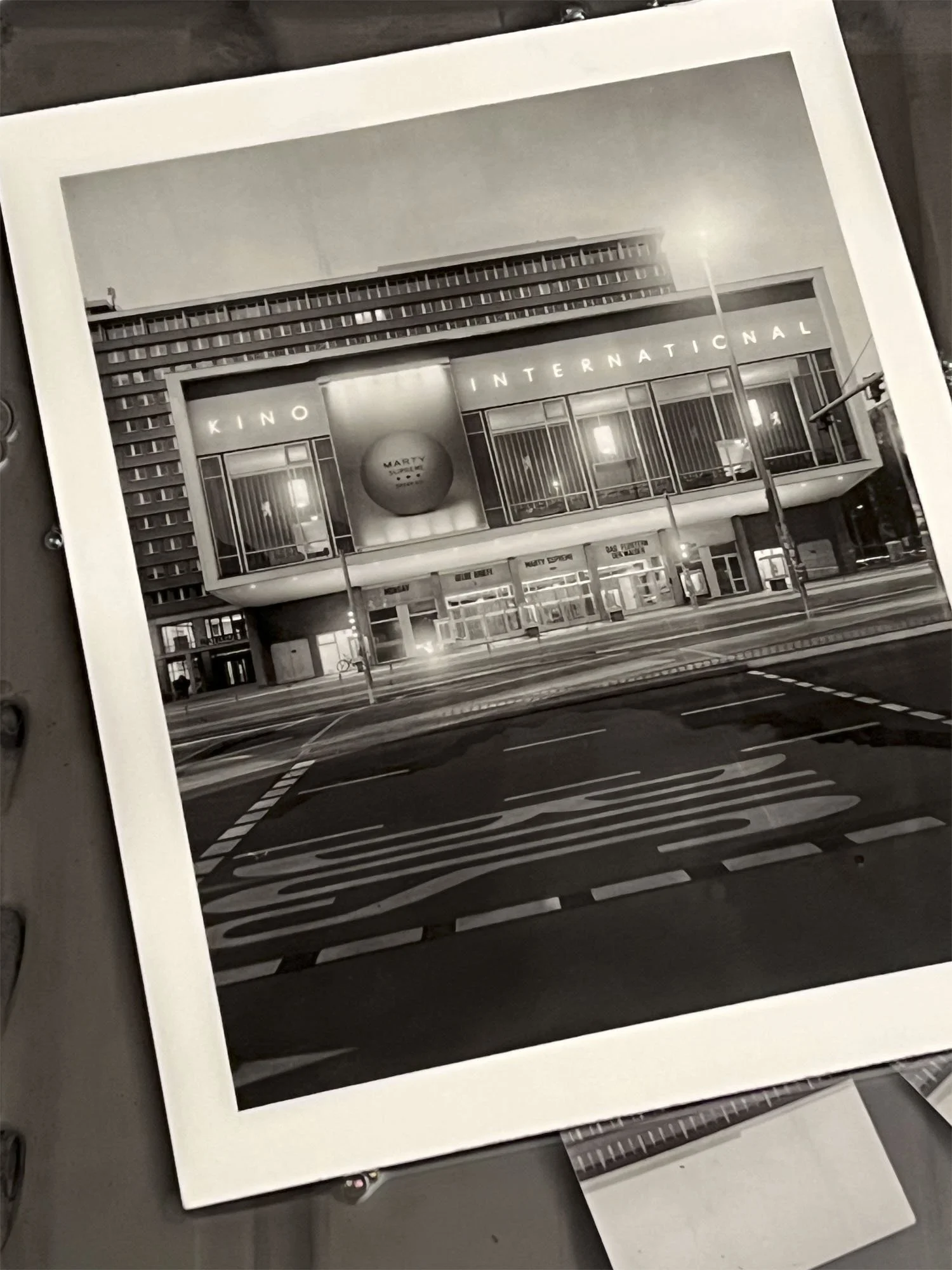
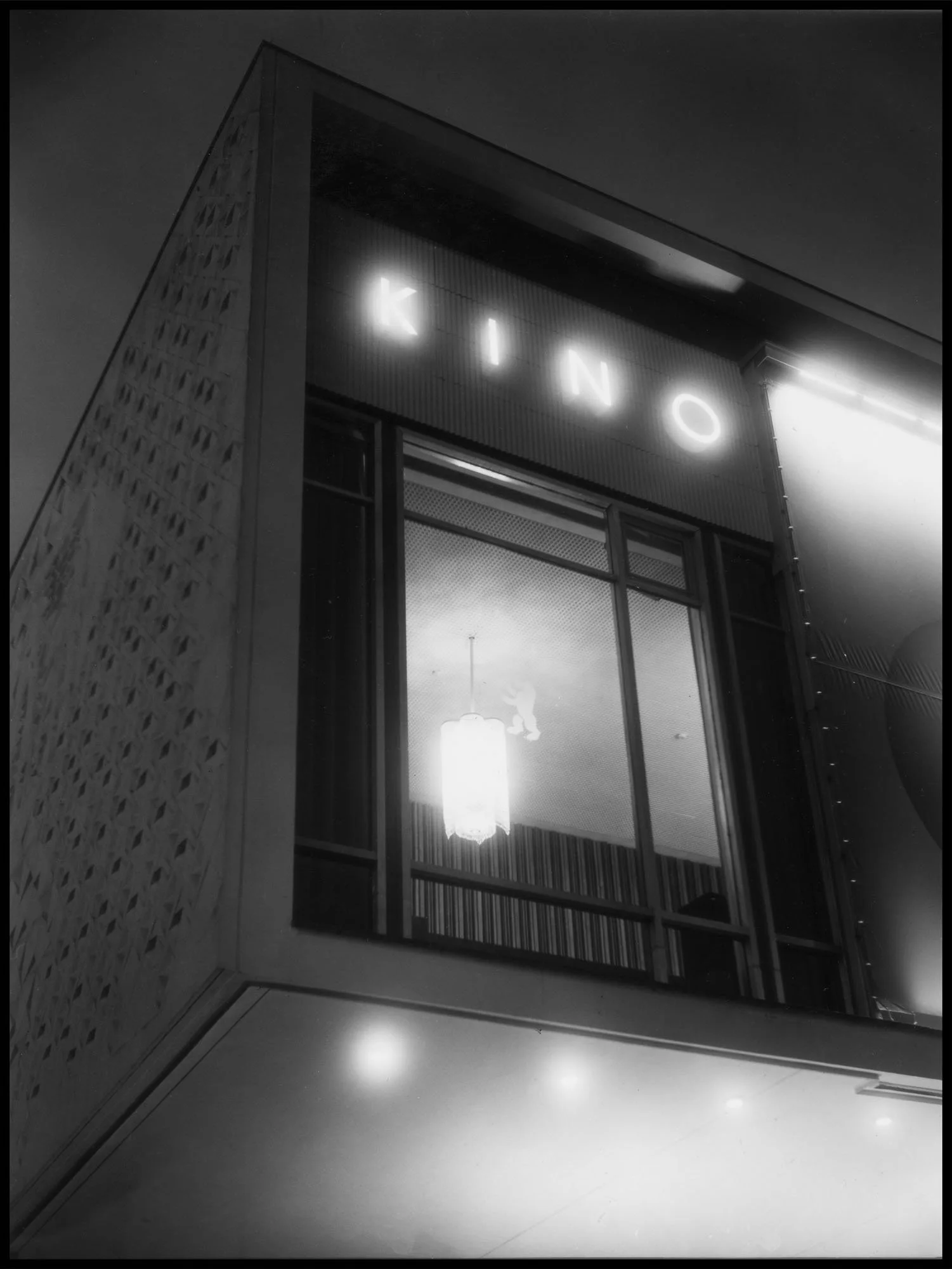
Some buildings become part of our lives without us ever really noticing. For years, Kino International was one of them. On my daily bicycle commute from Friedrichshain to Moabit, I passed the cinema countless times. Its unmistakable modernist façade became a familiar sight, quietly settling somewhere in the back of my mind. Earlier this year, while finishing a rather unusual hardware project, the building came back into focus. I had been developing an adapter to give century-old 9×12 cm plate cameras a second life, allowing them to shoot modern 4×5-inch sheet film. Among my test subjects was Kino International. One photograph, taken from across the street, developed and casually shared on Instagram.
The cinema noticed. A reaction, a repost, a conversation. And suddenly, what had begun as a simple test shot turned into an invitation to look beyond the façade. Over two half-days, I found myself wandering through the recently restored cinema, almost entirely alone. With an old plate camera, a handful of film holders, and the luxury of time, I explored the spaces that make Kino International such an extraordinary piece of Berlin's architectural history.
More than twenty exposures later, twelve photographs made the final selection for a poster. What started as a technical experiment had quietly become a photographic portrait of a building I thought I already knew.
My sincere thanks to the team at Kino International for opening their doors and making this experience possible.
Another source of inspiration has been Japanese photographer Hiroshi Sugimoto, whose monumental series Theaters is an extraordinary exploration of cinema, architecture, and the passage of time. His ability to transform these spaces into almost surreal, timeless images has always fascinated me. While my approach is quite different, his work certainly influenced the way I looked at Kino International.
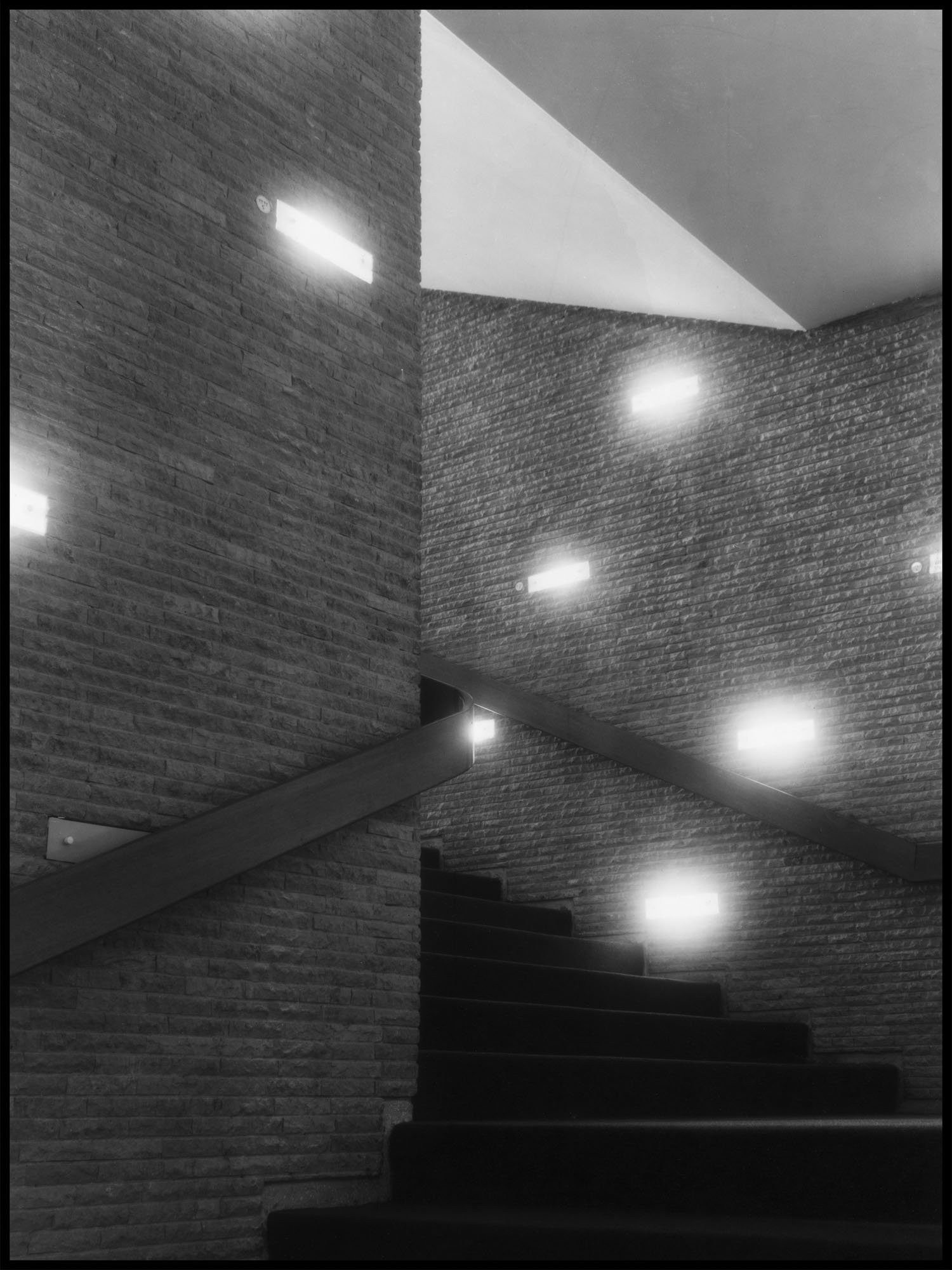
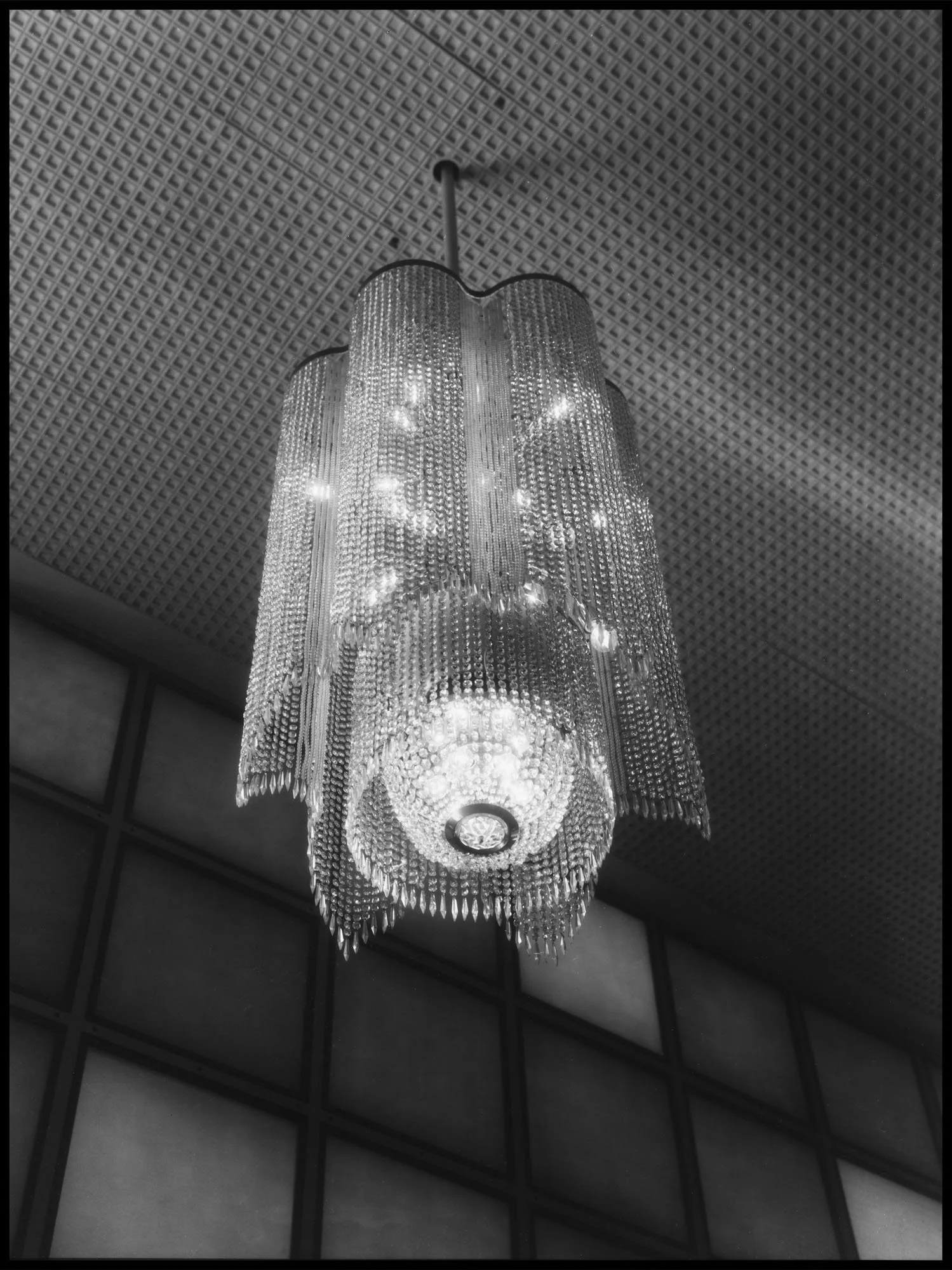
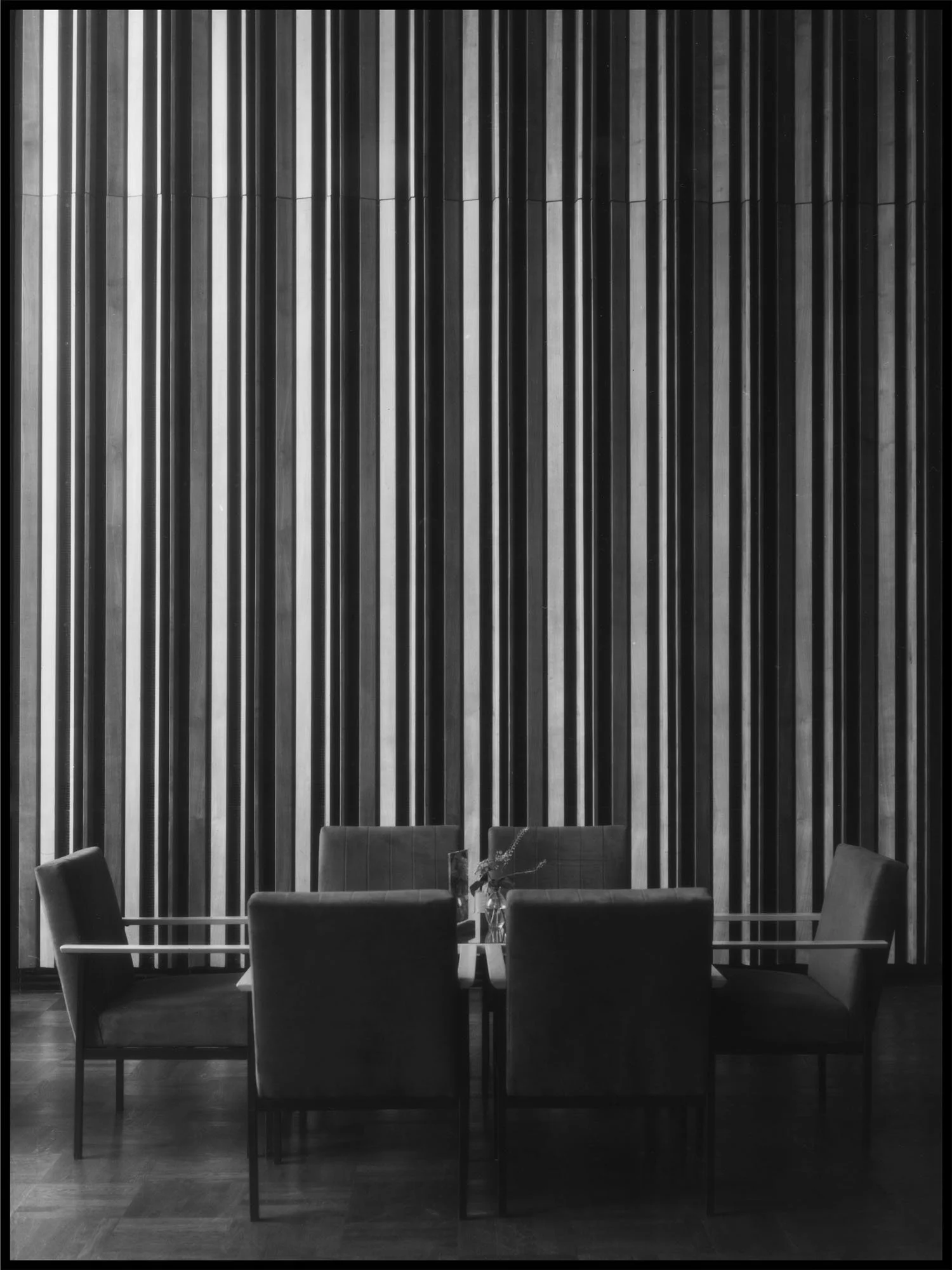
Kino International - After the Restoration
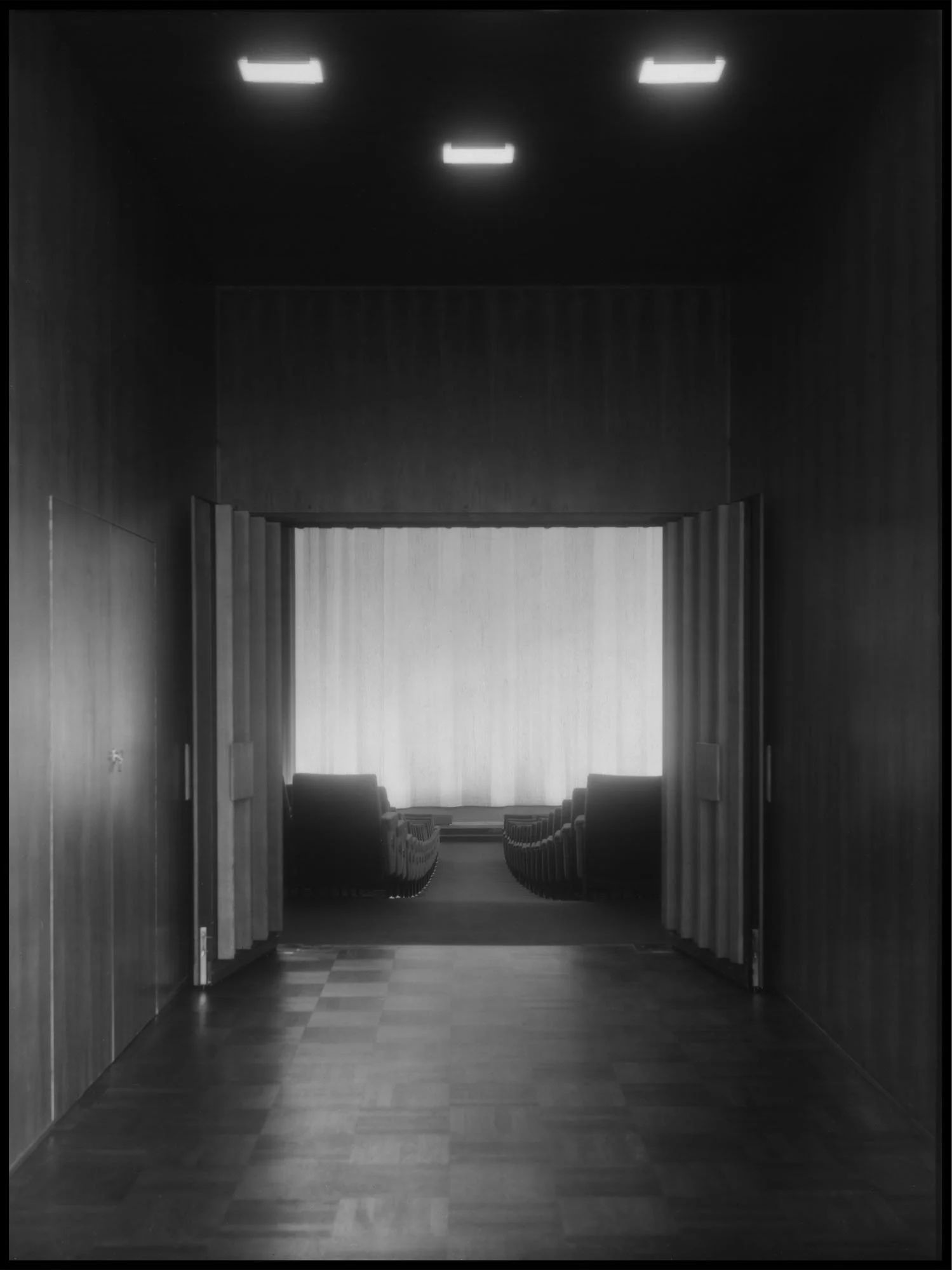
Shot on Fomapan 100 rated at EI 50, with N−2 development for controlled contrast and extended tonal detail.
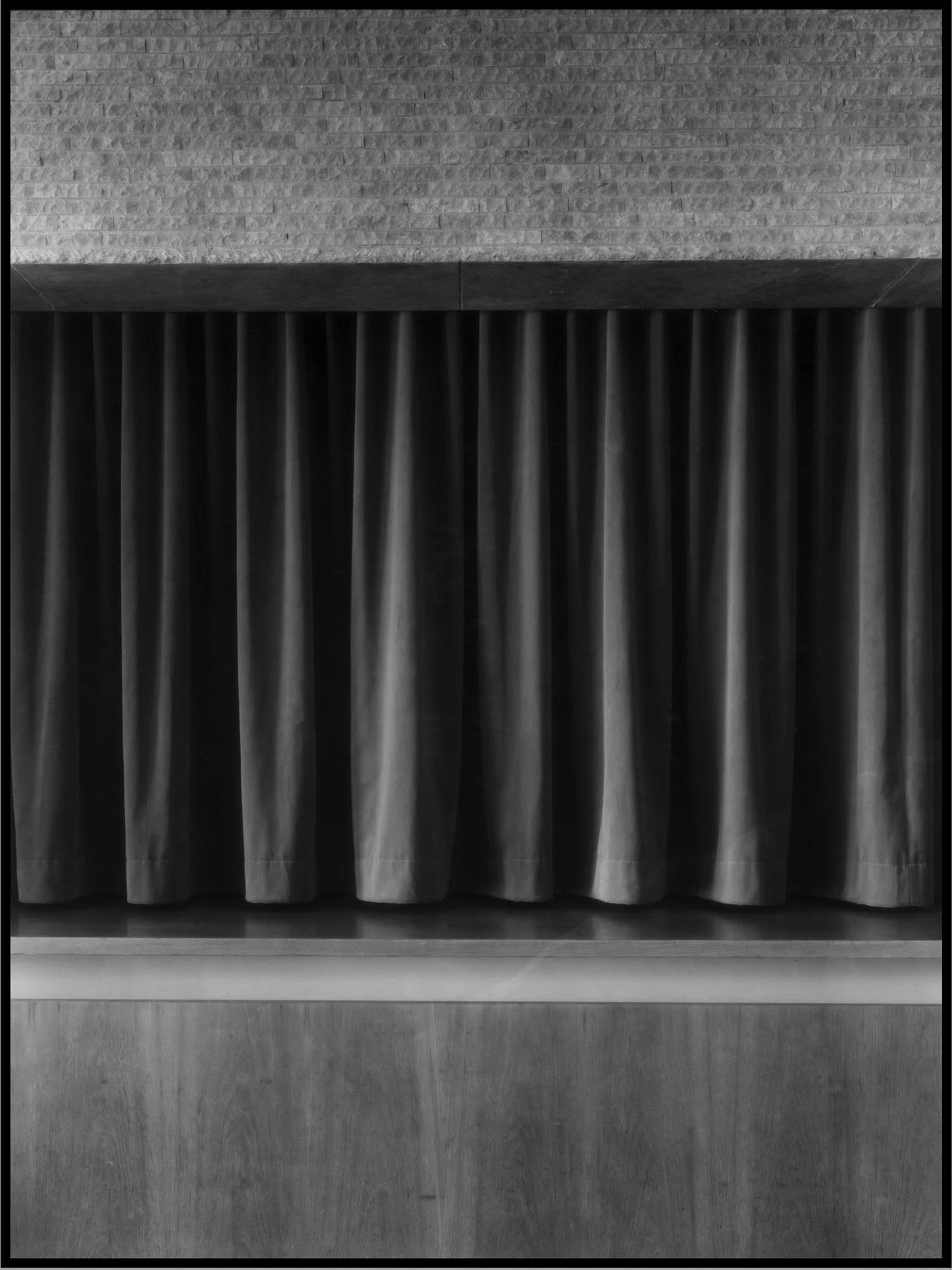
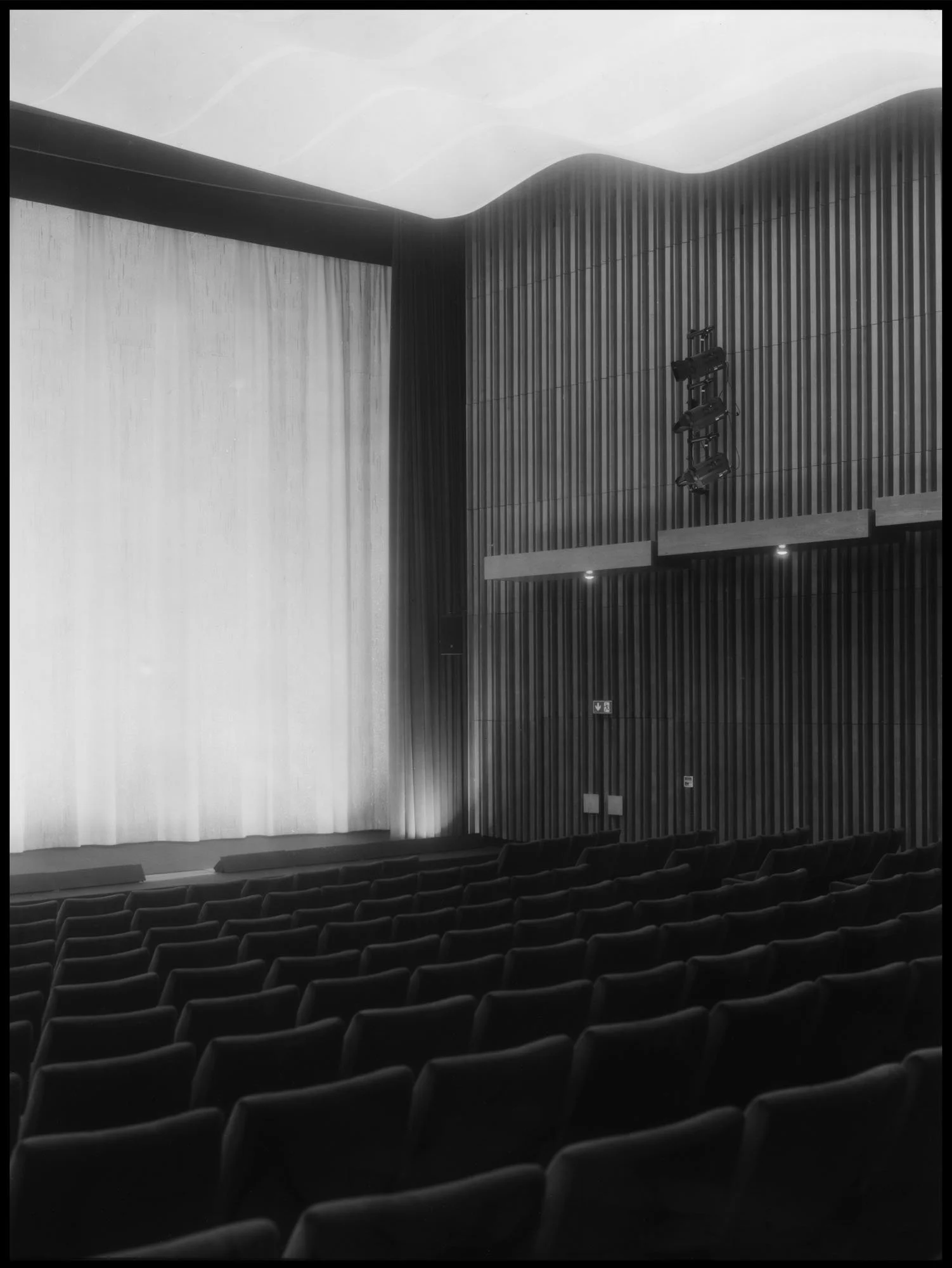
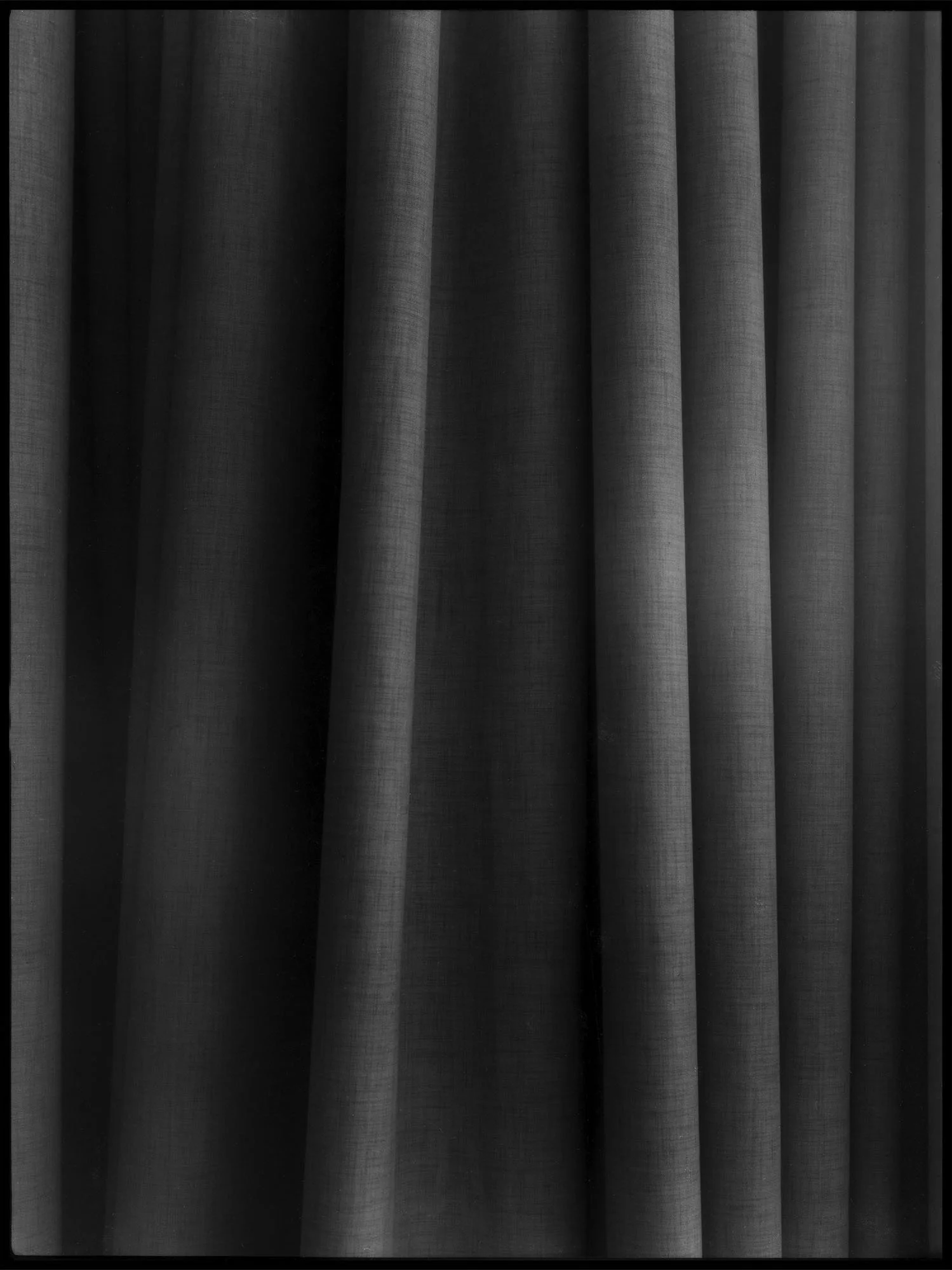
A New Chapter for Old Cameras
I've been shooting analogue film for over twenty years, mostly on 35mm and medium format. Somewhere in my camera collection, there's also a Wista 45D, a beautiful 4×5-inch large-format camera. Unfortunately, it's also a rather heavy piece of equipment, which means it spends considerably more time sitting on a shelf than actually taking pictures.
That frustration eventually led me to a little engineering project: developing an adapter that allows old 9×12 cm plate cameras, some nearly a century old, to shoot modern 4×5-inch sheet film. The result is a surprisingly compact large-format setup weighing less than a kilogram.
These cameras come with their own peculiarities. Technically, they can shoot in landscape orientation, but their folding mechanisms were primarily designed around portrait format. Rather than fighting the camera, I decided to embrace its limitations and retrain my eye to see the world in vertical 4×5 frames. And somehow, I stuck with it.
Film, Light & a Little Bit of Cinema
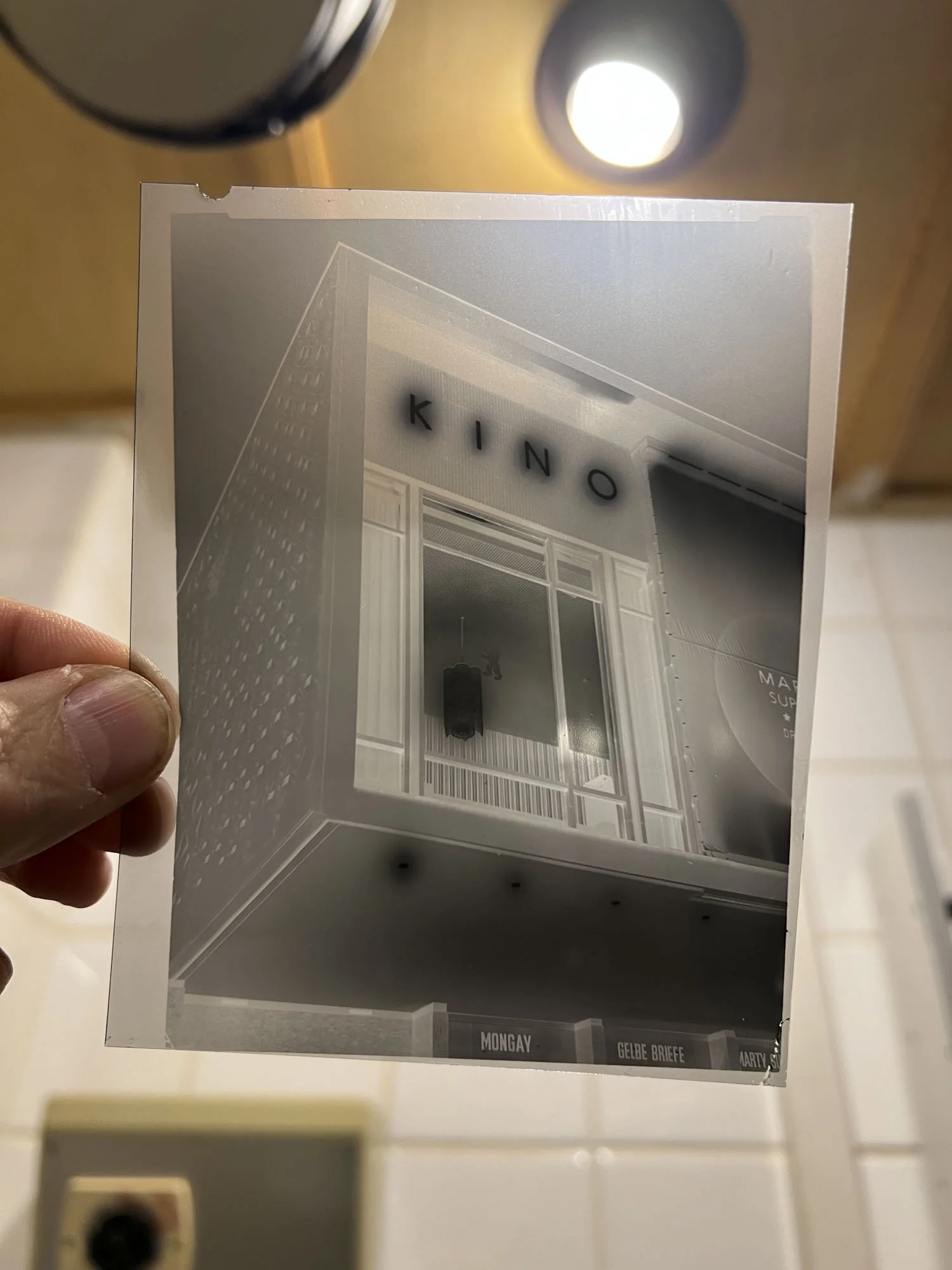
4×5in negative
The larger the negative, the less I find myself worrying about film brands. At least that's my impression. With so much surface area to work with, the differences seem to matter less than they do with smaller formats.
For this series, I chose Fomapan 100, partly for its affordability, and rated it at EI 50. For this series, I chose Fomapan 100, partly for its affordability, and rated it at EI 50. Combined with reduced development times, this gave me the tonal control I was looking for, particularly when dealing with the extreme contrast inside the cinema. Bright windows, reflective surfaces and deep shadows created an enormous range of light. With the Zone System in mind, I carefully metered each scene and developed most of the negatives at N−2, significantly reducing development time to control highlight density while preserving detail in the brightest areas.
I also placed a ¼-strength mist filter in front of the lens. These old cameras already have a wonderful optical character, particularly when used wide open, where their lenses can produce a soft, almost dreamlike glow. Stop them down, however, and they become remarkably sharp. The mist filter brought back a subtle halation around bright light sources, lending the photographs a slightly cinematic atmosphere. A little film noir felt rather appropriate for a cinema.
Less Equipment, More Photography
One surprisingly useful feature of these old plate cameras is their ability to shift the front standard upwards by roughly two centimetres. This allows me to compensate for converging vertical lines when photographing architecture, keeping walls and columns straight without tilting the entire camera.
Modern large-format cameras offer considerably more movements and flexibility, of course. Mine has a fixed focal length, limited adjustments and a few mechanical quirks.
But there's something rather liberating about carrying a complete large-format camera setup weighing less than a kilogram. Roughly half the weight of a more conventional setup, with fewer possibilities to adjust things and fewer decisions to make.
Sometimes, limitations are exactly what make a camera interesting.